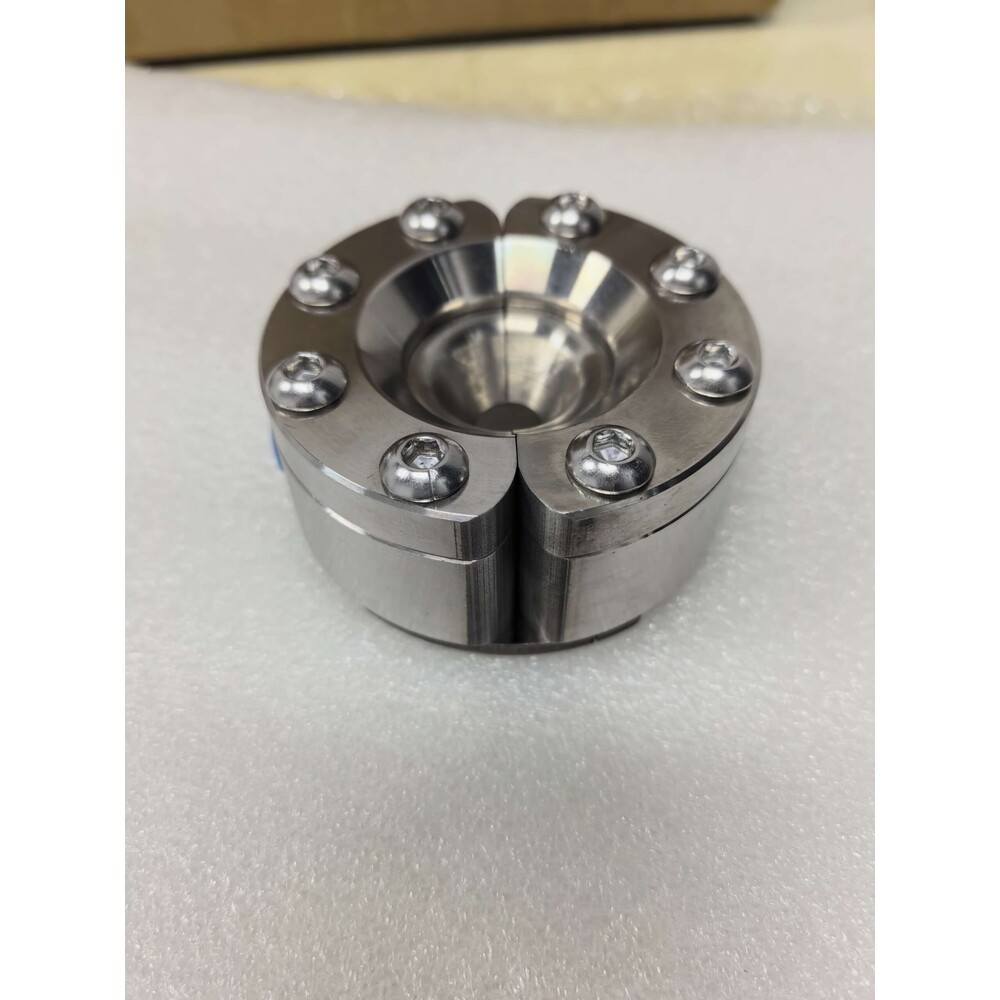
Air Amplifier Solutions-Efficient Airflow for Moving, Conveying, Cooling and Drying
Need a quotation for this product?
Send us your line speed, the material you are working with and the destination country. Our engineers reply with a price and a delivery time within one working day.
Or email [email protected] / WhatsApp: Alfred +86 15817597016 · Kasumy +86 15920269756
Product Details
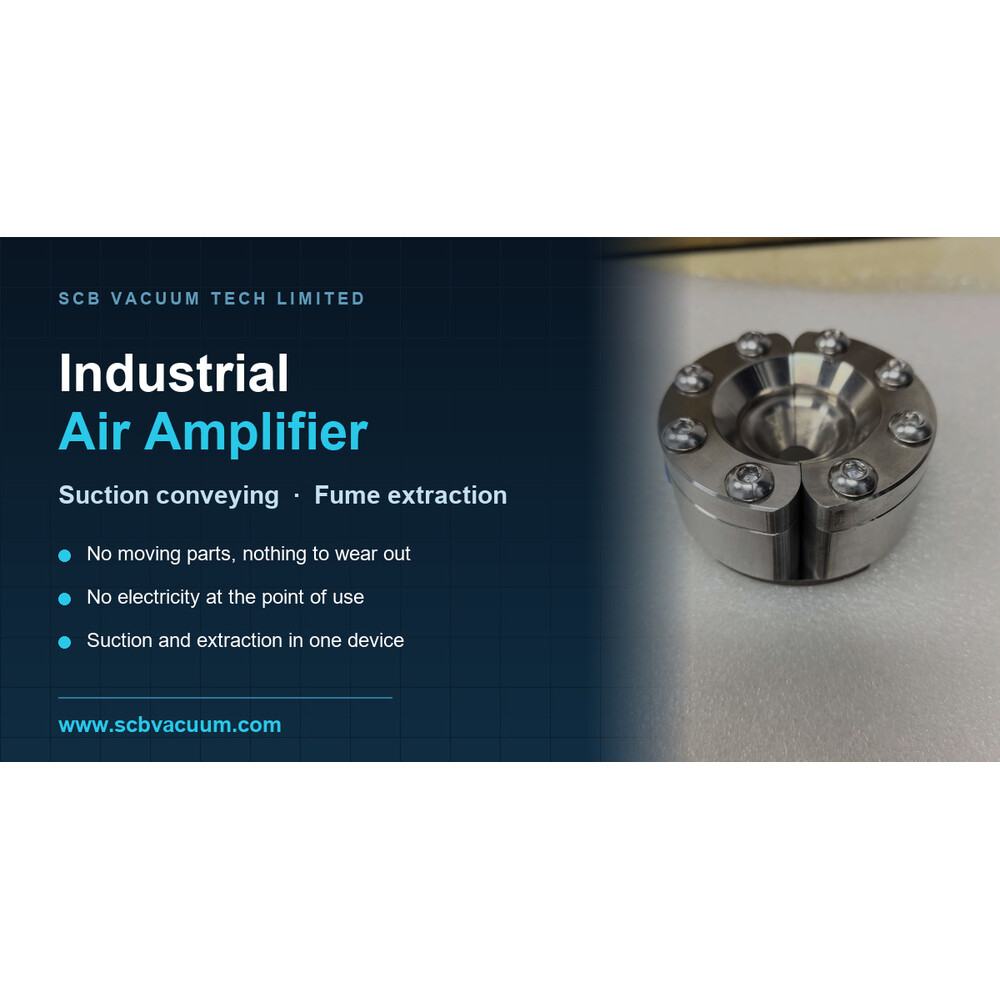
Industrial Air Amplifier Solutions for Suction Conveying and Fume Extraction
Introduction
Moving air is one of the cheapest ways to move things — provided the equipment doing it is simple enough to keep running. That is the practical appeal of the air amplifier: a device with no motor, no impeller and no moving parts in the air path, which uses a small amount of compressed air to move a much larger volume of ambient air.
On production lines, this single principle covers two jobs that are usually solved with two different machines. One is suction conveying — picking up, holding and transferring material. The other is extraction — pulling fumes, dust, mist or smoke away from the point where they are generated. An air amplifier does both, which is why it appears in welding booths, powder handling rooms, packaging lines and wastewater plants.
What Is an Air Amplifier?
An air amplifier is a static device that multiplies airflow. Compressed air enters through a small inlet and is accelerated through an internal annular nozzle. The resulting high-velocity stream travels along a curved internal profile and stays attached to that surface — the Coanda effect — while dragging surrounding ambient air along with it. The output is a large, directed flow of air produced from a comparatively small compressed air input.
Two consequences follow from this design, and both matter in industrial use. First, there is nothing to wear out: no bearings, no belts, no impeller and no shaft seal. Second, the device needs no electrical connection at the point of use, which makes it suitable for wet, dusty, hot or potentially explosive areas where a motor would be a complication.
Suction and Conveying: Moving Material Without a Vacuum Pump
When an air amplifier is configured as a vacuum generator, the same principle works in reverse: compressed air is used to create a low-pressure zone that draws material in, and the amplified flow carries it out through the discharge.
This gives a simple conveying solution for applications where an electric vacuum pump is inconvenient. Typical duties include drawing powder or granules from a hopper, transferring small components between stations, holding and placing parts in pick-and-place fixtures, lifting film, labels or light panels, extracting material from a bin or silo, and moving product through a pneumatic tube.
The advantages are practical rather than theoretical. Suction force can be regulated by adjusting the compressed air pressure, so the same device can handle different products without mechanical changes. The unit can be mounted directly at the point of pick-up rather than connected to a central system through long ductwork. And because the suction is generated at the tool, the losses that normally accumulate along a vacuum line are largely eliminated.
Extraction and Exhaust: Removing Fume, Dust and Mist at the Source
The second function is extraction. Air amplifiers are widely used as the driving element of local exhaust systems, pulling contaminated air away from the point of generation and discharging it through a duct or filter.
Because extraction works best close to the source, the ability to place a compact, electrically safe device near the process is the main advantage. Typical applications include welding fume removal, soldering and laser marking fume extraction, dust and lint capture in textile and woodworking operations, oil mist removal above machining centres, solvent and chemical vapour extraction from tanks and process vessels, and general ventilation of confined spaces such as tanks, pits and vessels before entry.
In these duties, the airflow is what removes the contaminant. Extracting at the source rather than ventilating the whole hall reduces the volume of air that has to be treated, which in turn reduces the size of the filter and the energy needed to move it.
Why Engineers Choose Air Amplifiers Over Fans and Vacuum Pumps
No moving parts. Nothing to lubricate, no belts or couplings to align, and no bearings to replace. Performance stays stable over long operating periods.
No electricity at the point of use. The device is driven by compressed air alone, so it can operate in wet, washdown, high-temperature or classified hazardous areas where installing a motor would require special protection.
Compact and easy to retrofit. A single unit can be mounted on a bracket or a machine frame, and the airflow can be directed with a hose or duct. There is no shaft alignment, no baseplate and no vibration issue to design around.
Controllable output. Flow and suction force are adjusted with a regulator or a simple valve, so the same device can be tuned to different products or different production rates.
Low maintenance. In practice, upkeep is limited to keeping the compressed air clean and checking fittings for leaks. A silencer or an engineered nozzle profile keeps noise within acceptable limits.
Where Air Amplifiers Are Used
- Metal fabrication: welding fume and grinding dust extraction at the workstation
- Electronics: solder fume extraction and particle removal near assembly stations
- Food and pharmaceutical: powder conveying, dust capture and gentle product transfer
- Packaging: pick-and-place assistance, film and label handling, dust removal before sealing
- Machining: oil mist extraction above machine tools
- Textile and woodworking: lint, fibre and dust collection
- Wastewater and aquaculture: aeration, mixing and tank ventilation
- Chemical and tank farms: vapour extraction and confined-space ventilation
How to Select the Right Air Amplifier
Selection starts with the job, not the model number. The first question is whether the unit has to generate suction, move a volume of air, or both. From there, four parameters drive the choice.
Required flow or suction force. This determines the size of the unit and the amplification ratio needed.
Available compressed air pressure. Most units operate most efficiently in a defined pressure band; excessive pressure increases consumption without a proportional gain in airflow.
Discharge distance and duct resistance. Longer ducts and filters add resistance, which must be included in the calculation rather than discovered after installation.
Environment and material. Temperature, moisture, chemical exposure and any explosion-risk classification determine whether a standard aluminium body is suitable or a stainless steel unit is required, and whether the air supply needs additional filtration.
Where noise is a constraint, specify a silencer at the outlet, and where the process is sensitive, filter the compressed air so that no oil or particulate reaches the product or the working area.
Running Cost: An Honest Comparison
Compressed air is expensive to produce, so an air amplifier is not automatically the cheapest way to move air. It wins where its specific advantages apply: intermittent duty, remote or inaccessible locations, hazardous or wet environments, and applications where the suction or extraction point has to be movable.
For continuous, high-volume conveying or aeration duties — a conveying line running three shifts, for example — a blower-driven system such as a ring blower, side channel blower or centrifugal blower generally delivers the same duty at lower running cost, and is usually the better long-term choice.
The practical approach is to define the duty cycle first. Intermittent and location-constrained duties favour the air amplifier; continuous high-volume duties favour a blower-based system. Many plants end up using both, and the selection should follow the application rather than the other way around.
Customized Solutions and Support
Air amplification is rarely a catalogue purchase. The correct configuration depends on the material being moved, the distance involved, the available air pressure, the environment and the noise limit of the plant.
SCB Vacuum Tech Limited can be made against the actual application rather than a fixed product line. Air conveying, cooling, drying, dust removal and blow-off duties are all covered, and units are available in configurations suited to different installation environments.
What to Send Us
To recommend a configuration, send us the application — what is being moved or extracted, the material and particle size for conveying duties, the distance the air or material must travel, the available compressed air pressure, the duty cycle, and any constraints on noise, temperature or hazardous area classification. Photographs of the installation point are more useful than a written description, because they show the available space and where the suction or extraction point can realistically be positioned.
Our engineers will respond with a recommended unit, the expected air consumption, and a comparison with a blower-based alternative where the duty cycle makes one more suitable.
SCB Vacuum Tech Limited
Tel: +86-769-33829612
WhatsApp: Alfred +86 15817597016 · Kasumy +86 15920269756
Email: [email protected]
Website: www.scbvacuum.com